

It’s been months since we’ve had any good news from Tidewater. So, like every shareholder, I was really glad to read about the refinancing they announced on Monday.
The effect is simple : Tidewater can now freely spend what it earns.
Let’s rewind a bit. When you look at the corporate presentation, you see a slide with future debt maturities of the group. In the comments : “Senior unsecured notes exit make-whole period in July 2025”. So from that date, Tidewater is able to redeem its debt with a premium and not by paying every interest until maturity (what “make-whole” means).
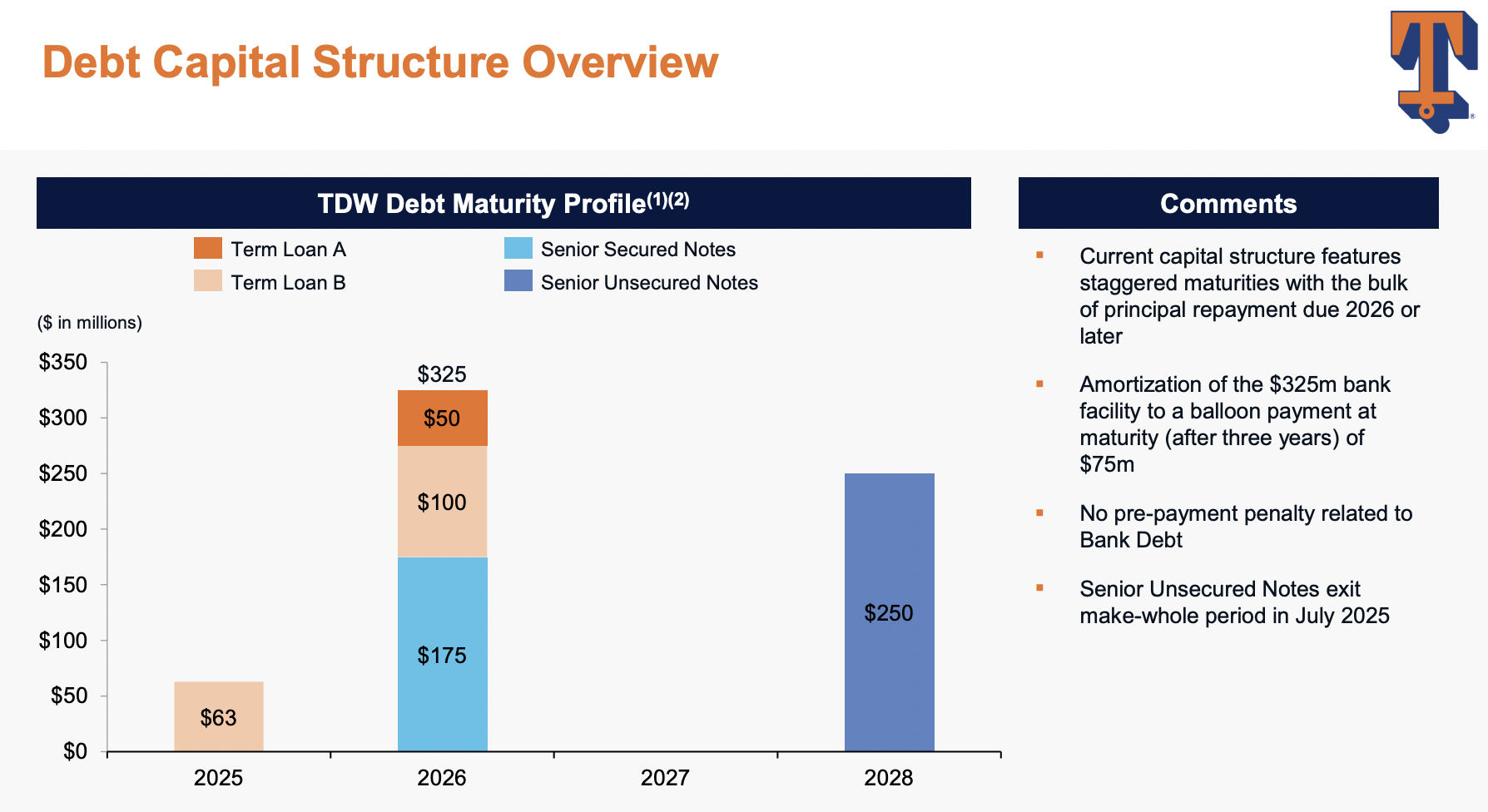
It’s the last debt instrument on their balance sheet to become callable.
Why is it important ?

So by reimbursing the bonds, Tidewater will remove the handcuffs and will be able to allocate free cash flow at its discretion. This is the real thing because from an interest expense point of view, there’s no change : the new 2030 bond bears interest of 9.125% ie 60m$ of interest, the same thing as the 3 debt instruments it will pay back.
What will it cost to TDW to redeem the various debt instruments ?
1/ There’s no premium to be paid on the 200m$ term loan so 200m$ ;
2/ 2.55% premium on the 175m$ of principal for the 2026 bond ie 180m$ ;
3/ 6.0% premium on the 250m$ of principal for the 2028 bond ie 265m$.
A grand total of 645m$ to be paid back then (well, the 650m$ issuance is no coincidence).
What will the balance sheet look like then ?
I expect between 300-400m$ of FCF this year. Debt structure will be clean so most of the FCF will be directed to shareholder returns, share buybacks specifically. At 45$ a share, TDW trades at 13m$ per OSV, far from the newbuild cost of 40m$ (cf Seacor and not TDW presentation). Value accretive I guess.
What to expect for the coming years ?
In a recent interview at Marine Money Week, CEO Quintin Kneen mentioned that “nothing was put to the right” from their point of view : projects are still coming in and boats are utilized. He also reminded us that TDW is not 100% dependent on the offshore drilling market. Most of its sales come from platform maintenance. The drilling activity however is important because it adds extra demand and is therefore the driver of increased dayrates.
Looking at what the drillers said recently, we should expect a rebound in demand for the next couple of years (cf chart below). This will increase demand for OSVs and therefore drive their dayrates up again as the supply isn’t elastic enough.
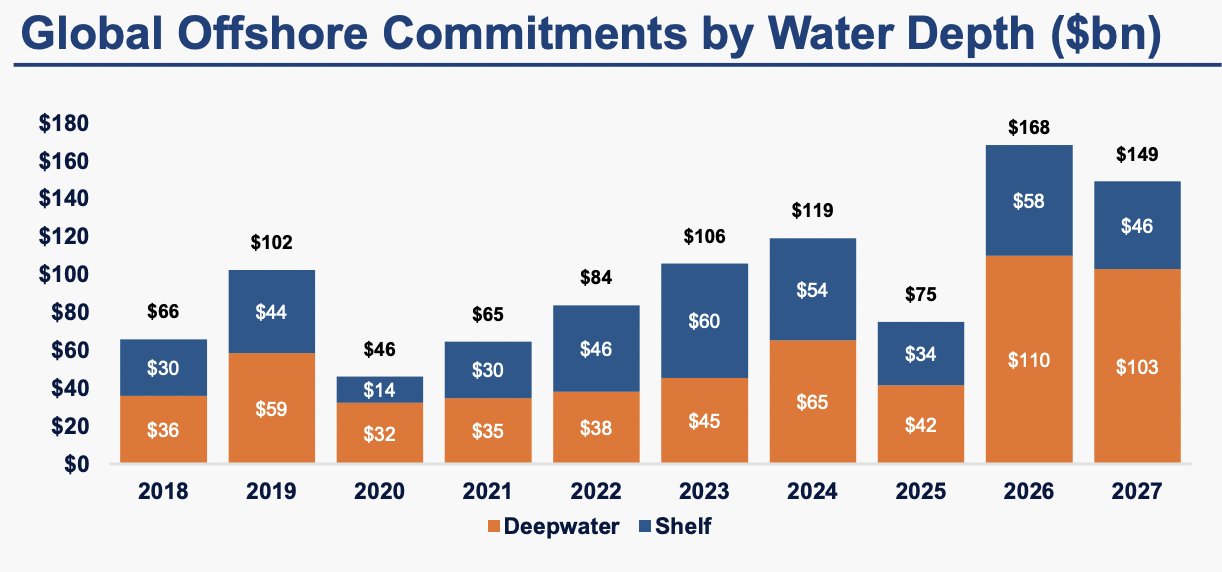
Source : Tidewater presentation (from Rystad)
What does it mean for Tidewater ?
This is what occurred between early 2023 and late 2024 : average dayrate went from 14k$ to 22k$. Assuming average dayrates of 25k$, 28k$ and 30k$, with utilisation rates ranging from 80 to 90% (close to maximum), I get the following FCF generation table :
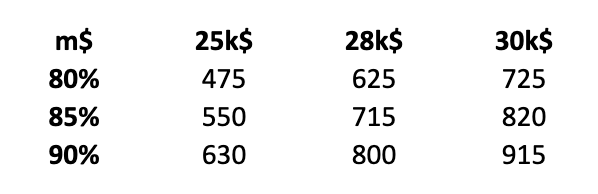
My opinion is that top FCF could be generated as soon as 2027. In the interim, TDW will probably generate a combined FCF of c1bn$ during 2025 and 2026. Assuming 50% of that FCF goes to buybacks, share count would drop to 41m from 50m (taking 60$ average share price). Assuming 100% (ie TDW only keeps its 400m$ cash position and doesn’t build on top of it), share count goes to 33m.
At a 50% discount to replacement value, TDW’s fleet is worth c3.3bn$. So between 80$ and 100$ per share assuming the counts above. This is a margin of safety.
Two main variables will influence where it trades over the next few years : 1/ how is their contract structure is managed, and 2/ how they handle their newbuild program ? Right now the management still wants to contract short in order to benefit from the increase in spot prices, and regarding newbuilds, they consider they don’t make sense at today’s dayrate level (NB : other players like Seacor beg to differ). So let’s be patient.
When we look at where offshore related stocks traded during the previous upcycle, we get the following table. It assumes a net income top range of 800m$ to 1,000m$, a multiple between 7-10x, and a share count of 35m :
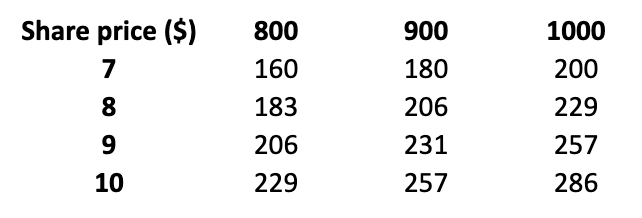
This setup is really compelling and can deliver a 5x return over the next 2-3 years. I expect to see insiders acquiring shares once the current blackout period is done. Tidewater is my second largest position today.

0 Comments